spring
Good morning,
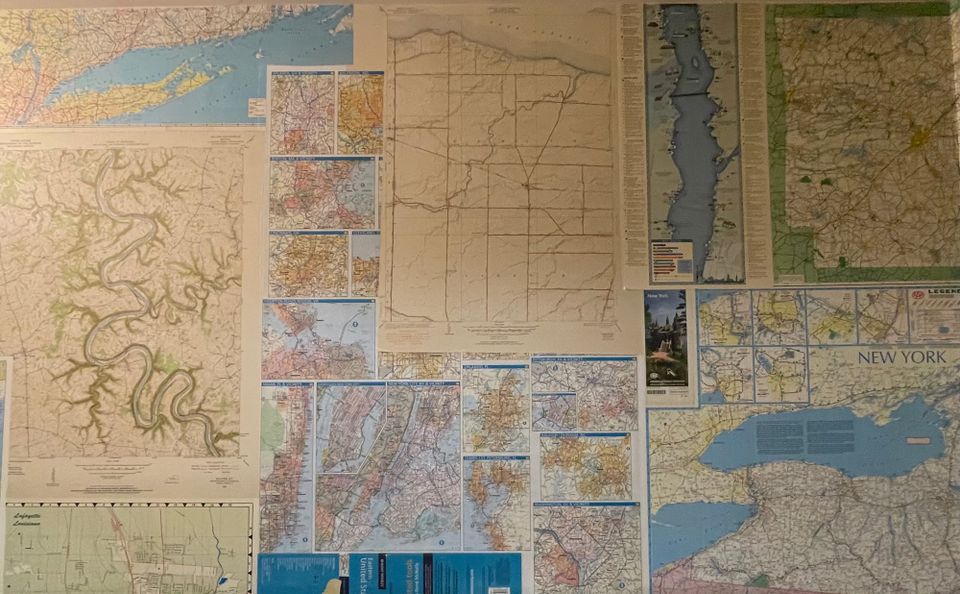
Spring has arrived in Upstate New York. On a Saturday in April, I went to New York City and back in one day. In itself, this was not a notable achievement. But the trip felt special to me.
By car, I never know which route to the city is best. On this particular morning, traffic and construction funneled us onto narrow New Jersey roads and eventually into Tribeca via the Holland Tunnel. We arrived around 1 p.m., just in time for a burgeoning spring day to burst open, like the petals of a flower.
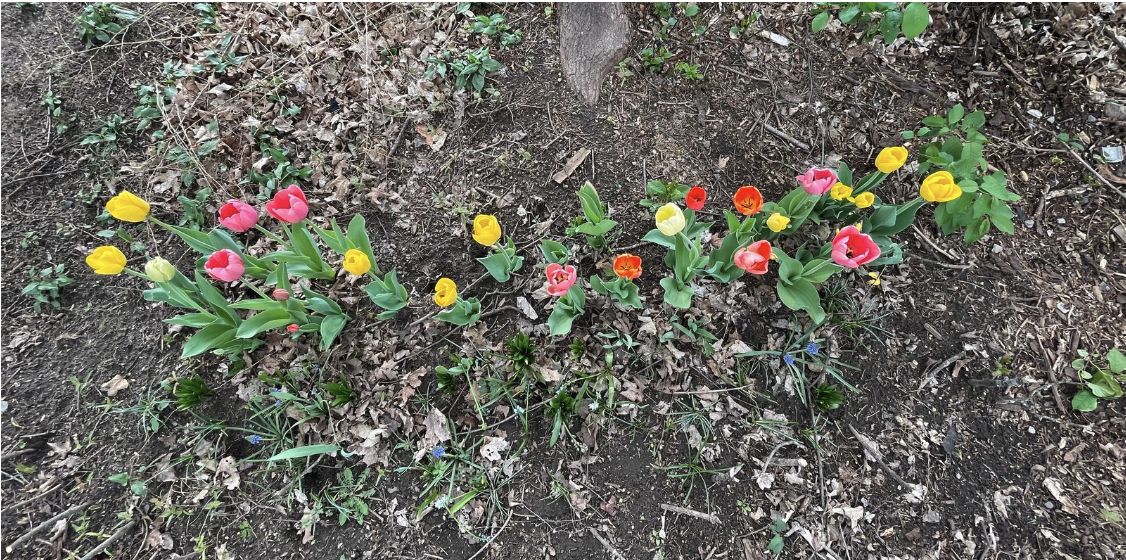
I spent the afternoon walking around lower Manhattan with my partner and her almost-three year old nephew. His whims dictated our decisions and itinerary. We visited a small toy store and, despite his abundant collection of trains and cars, couldn’t help but buy him another; we discovered a new sandwich shop for lunch; and we spent an hour sitting in a small park, surrounded by what felt like hundreds of toddlers his age, screaming, running around, flying kites, biking faster than seemed advisable, etc.
The city felt unruly and joyful, in the middle of its messy but determined awakening from winter to spring, which reminded me why I love it. At around 5 p.m., I said goodbye and made my way to Port Authority to catch a bus home by myself.
There are so many lines of connection between Kingston, the medium-sized Hudson Valley town where I now live, and New York City. And yet, despite the hundreds of trains and buses I’ve ridden across the state, I had not yet taken the bus from New York City to Kingston. The sun was setting as we crossed out of Manhattan, sinking closer to the horizon while the suburbs of New Jersey faded into the rocky hills of New York. The bus was too bouncy for me to be able to read, so I only listened to music as I watched the landscape change, absorbing the details of another, novel combination of highways and roads across New York state.
I arrived in Kingston around 8 p.m., surprised to not feel depleted from all the transit. A new friend picked me up from the station. I piled into her car and she said, it’s probably been a long day, but want to come over for dinner? A few minutes later, I sat down at her dining room table, where her partner and two other friends handed me a plate of roasted asparagus, potatoes, and fish. We spent the rest of the evening eating strawberry shortcake, telling stories, and laughing.
Later that night, after dumping all my bags in our front hall and greeting the cats, I was taking a shower when I had the thought, this place finally feels like home.

Though I’ve lived in different locations across northern New York for decades, I moved to Kingston only a year ago. I wondered, that night, what brought this feeling of home forward.
Maybe, I thought, it was the time spent laughing with friends. The sense that I knew enough people, and felt comfortable in enough relationships, to land a ride home and find myself at an impromptu dinner party, at a house I’ve now visited enough for it to feel familiar, contributed. There was also the experience of walking into my own house: Like I’d transited the front door enough times to not only know where to put things and where to find things, but to feel something different — something like familiarity, but not only that.
Perhaps it was also the whole day that unearthed the feeling in me. I’ve driven to New York City countless times but am new to driving there from here. My understanding of how to get there from here is deepening. I’m slowly filling in a clearer picture of the Hudson River and all the creeks and waterways with whom it connects. I’m coming to know the towns that sit along the river — and among the fields, hills, and mountains on either side of it. I’m discovering discrete neighborhoods, diners, bookstores, and art studios hidden near remote creeks, behind pockets of hills, in undeveloped patches of forest.
By some measures, I have lived “here” a long time. But then again, where does a place begin and end? Across New York State, I’ve lived almost 30 years in different counties, regions, cities, and towns. I am not a naturalist, but I have a certain type of familiarity with the area’s rocks and birds and waterways and trees — the type that comes from a long time spent together. I know many of Upstate New York's cultures and sub-cultures. I know what gas stations to expect on the roads and what colors and fonts to expect on the highway signs.
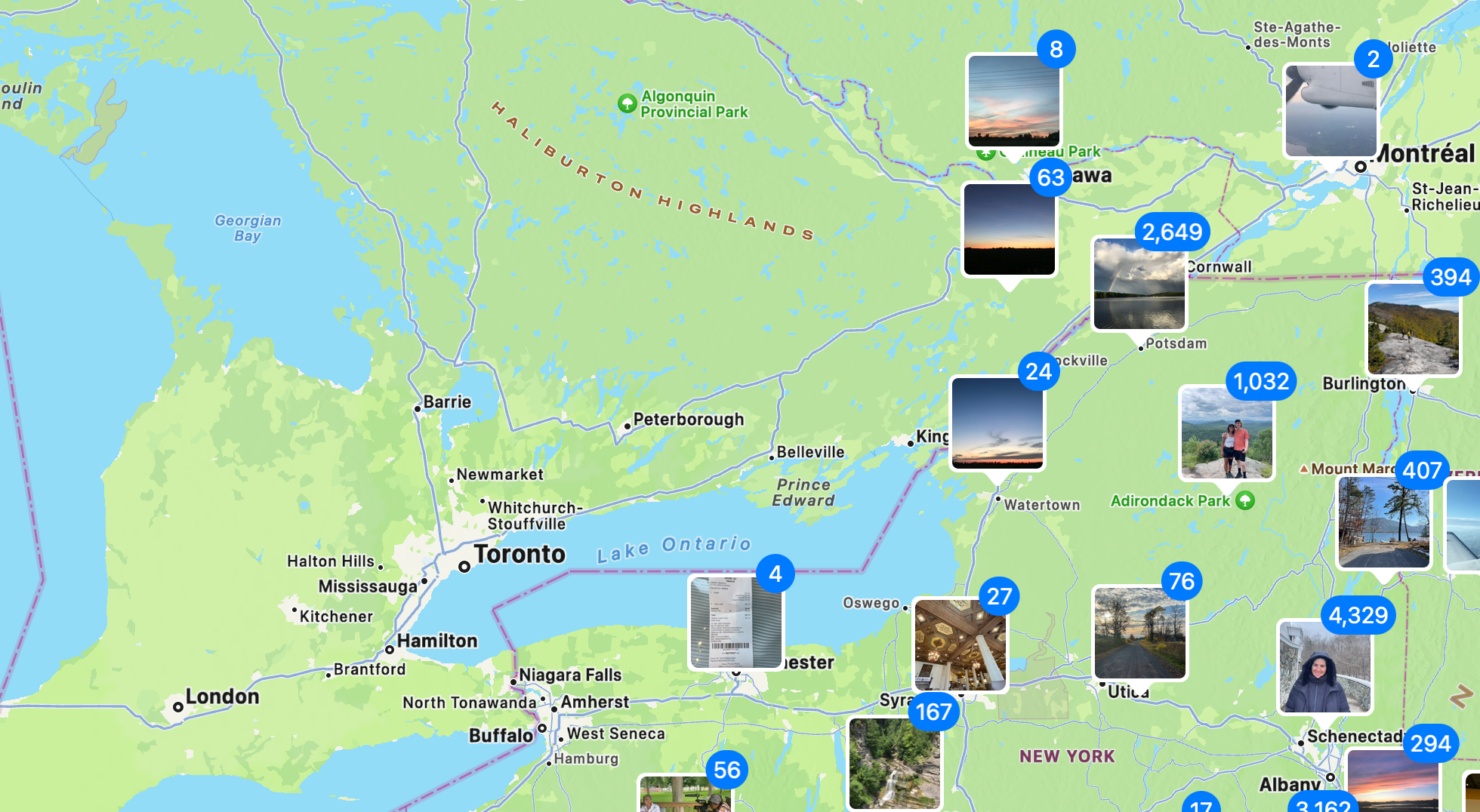
But to the Hudson Valley, I am new. I’m looking out at the same “place” from a different window, with a slightly altered perspective. From this new orientation, the “region” looks different. I take a different set of roads to New York City; I connect to the same communities from a different set of coordinates; I follow a different set of paths to the same mountain ranges and rivers and woods. I look out at what is essentially the same body of land but relate to it, and everything that lives on it, from a slightly altered angle. Everything shifted a bit, as if the layers of lines that connect me to various places and creatures have, through a swift kaleidoscope motion, changed shape.

In her newest book, “Theory of Water: Nashnaabe Maps to the Times Ahead,” Michi Saagiig Nishnaabeg writer Leanne Betasamosake Simpson shared a story about eels.
She began with the late Anishinaabe Professor Doug Williams who, on a walk, described the presence of eels in their territory. “I didn’t know what he was talking about,” she wrote. “There are no eels in our territory and there is no ocean in our territory.”
The Anishinaabe people are indigenous to a vast area of land that reaches from the northern edges of New York State across Canada to the northern tip of Michigan, often called the “great lakes region” of the United States and Canada. I grew up in a small town 20 miles south of the border between Canada and New York state, right near the territory she described.
I also had no idea what Williams was talking about.
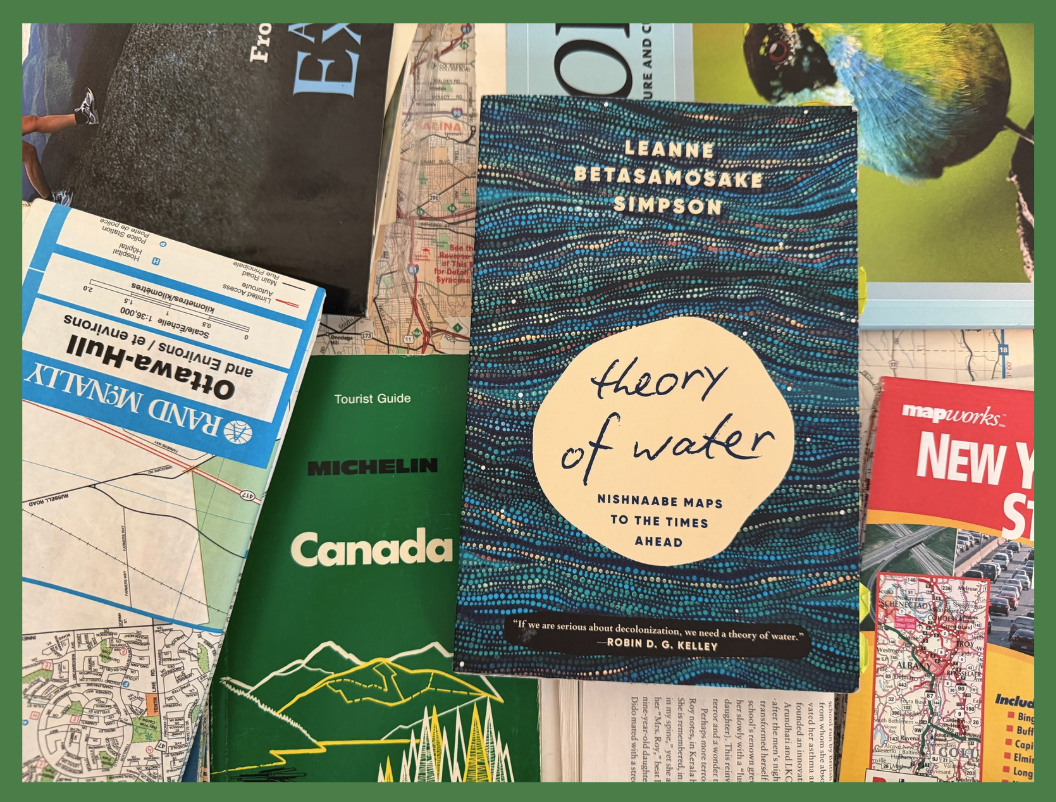
Simpson shared what she learned from him, outlining the migratory journey that eels undertake from the Sargasso Sea — a “sea with no shores” near the Bahamas, which is bordered by ocean currents on all sides — all the way to Atlantic Canada, the St. Lawrence River, which runs along the border of Canada and the United States, and Lake Ontario, thousands of miles away.
Along the way, eels grow through a remarkable number of stages. They are born as eggs and hatch into larvae, which then follow the Gulf Stream for seven to twelve months. Once they are 55 to 65 millimeters in length, they become “glass eels,” translucent and surreal as they live out their juvenile stage. After that, eels slowly become pigmented. Once fully pigmented, they become “elvers,” a stage they remain in for three to twelve months.
During this process, many eels move from ocean waters to estuaries and fresh water rivers, lakes, and streams. (Eels can live their whole lives in oceans, or spend ten to 25 years in fresh water.) On the north shore of the Gulf of St. Lawrence, Simpson wrote, arrival usually occurs in July.
Eventually, elvers mature into yellow eels and a few years after that, become silver eels. Some of those silver eels will, once ready, turn around and retrace the thousands of miles they’ve travelled, this time back home to the Sargasso Sea, where scientists think they reproduce. In fact, no person or scientist has ever seen an eel mate. [1]
I had a hard time believing what Simpson wrote.
I was mesmerized by the life cycles and mysteries of the eel, yes, but more than that, I was genuinely astounded to learn about how much was happening in the waterways of a region where I lived for decades. In all my years of crossing the St. Lawrence River — of living and swimming in the region — I’d never encountered an eel. I’d never even heard of an eel.
There are, I suspect, many reasons why. Perhaps the main reason is that they are now facing extinction.
“Eels once made up half the biomass in Lake Ontario,” Simpson wrote. Since the 1980s, scientists estimate that the eel population in Ontario has declined by 99%.
Mohawk territory borders and overlaps with Anishinaabe land across Canada and New York State, and includes parts of the St. Lawrence River. There, in the 1950s, the construction of the Moses-Saunders hydro power dam on the St. Lawrence was “catastrophic” for eels. Simpson quoted Mohawk Elder Henry Lickers, who described “the band council sending trucks and wagons to collect the dead and rotting bodies of thousands of eels, piled to half a metre deep, in the bays and covers downstream of construction.”
Today there are over eight thousand dams in the St. Lawrence watershed, which, in combination with water pollution and commercial overfishing in the nineteenth and twentieth centuries, “all but ended the world of the eels in Nishnaabegaki,” Simpson wrote.

Considering the story of eels in her territory, Simpson returned to one of the central curiosities of her book: how to find a way through when ideas, systems, or tragedies make one feel stuck.
“What I know now about eels signals the danger of dividing knowledge into disciplines, geographic regions, time periods, and particular struggles,” she wrote. “Empire and capitalism are global, and when knowledge is enclosed, it is incomplete.”
When knowledge is enclosed, it is incomplete.
“The colonizers needed a book, a letter, a document, a compass, a paper, a policy, a law, an accounting,” Simpson wrote. “When [they] came, they were always lost because they refused to live in the network of the living.”
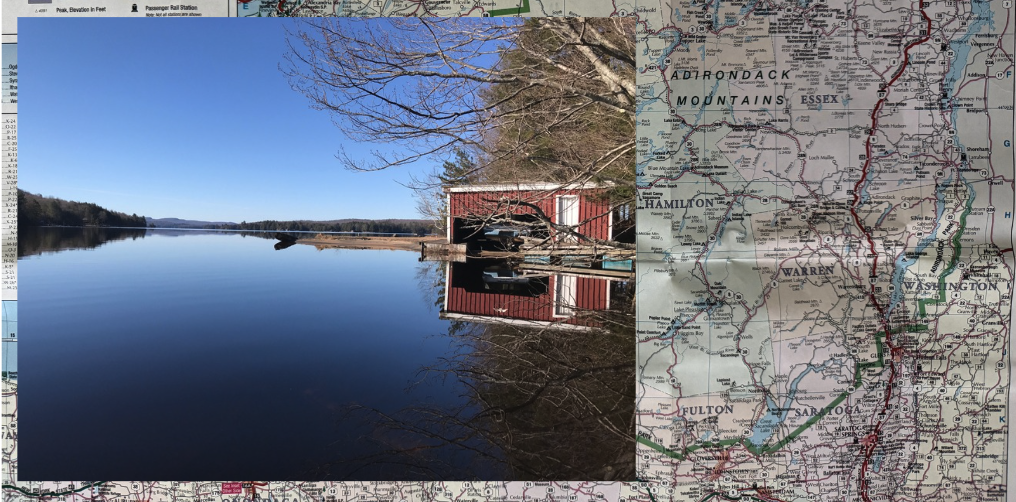
I’ve continued to read and reread this chapter. I’ve continued to think about the eels swimming in waterways along the northern edges of the United States, near where I grew up.
I’ve continued to ponder the ways that people try to understand and represent a place. Journalists, with their beats and case studies. Naturalists, who try to capture a place by documenting its trees, water, moss, birds, mushrooms. Local historians with their walking tours, exhibits, and plaques. Local artists with their textiles and songs. All the people who use ritual, a camera, a "document," a "compass."
There are other ways to describe a place that grow through the cracks of these methods.
“Nishnaabeg carried travel routes in their heads, routes that were passed down and had an east-west orientation rather than a north-south one, focused on creeks, streams, rivers, lakes and portages,” Simpson wrote. “These maps were stories upon stories of each time people had travelled the route, and of each time their parents and grandparents had travelled those same rivers and lakes. They were stories of storms and hard times. Of meet-ups and good luck. The bends and riffles, mnemonic devices for memories. The smells and sounds, reminders of the route. Each journey, another ring.”
I am not indigenous to this region, but I appreciate the way Simpson talks about it.[2] Beyond the default categories used by journalists, historians, naturalists, etc. lies something else. To me, Upstate New York is made of streets, structures, trees, lakes, animals, people, and political systems, but also of personal and generational memories, sensations and sounds, repetitive actions; of storms and hard times and meet-ups and good luck; of things I can name and things I can’t.
I find it challenging to write without, intentionally or not, trying to put reality into a "a book, a letter, a document, a compass, a paper, a policy, a law, an accounting." But on rare occasions, I encounter writing or art that gestures at the true nature of a place without trying to categorize or contain it — creations that don't aim to enclose knowledge but to shift it. To gesture well feels hard — almost impossible. But the older I get, the more I am able to find delight in impossible tasks — such as telling you something complete about this place where I've lived for so long. And the more I find appreciation for others who make imperfect but earnest gestures, too; all of us, in our own ways, admitting participation in the network of the living, rather than an understanding of it.

Work Things
*You may have noticed that this newsletter is now called field notes. I started this newsletter to write about media, politics, political possibilities, etc. I’m now expanding the container. I’ll send dispatches, short memos, longer essays that don’t quite fit elsewhere. I’ll share field notes from my life and about the places where I live. I'll also send notes from or about the fields in which I’ve worked for over a decade. I’ll probably write about other subjects and other ‘fields,’ too. :)
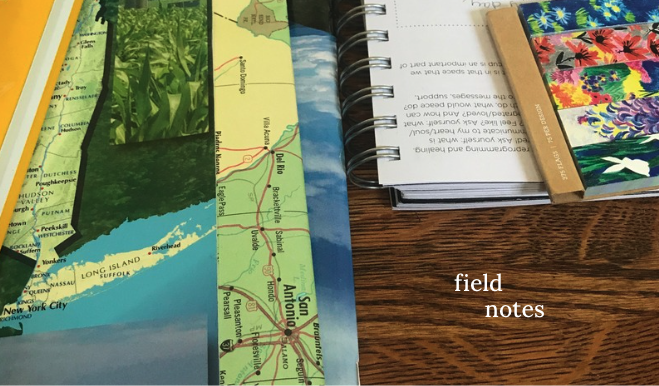
I love hearing from you, and I hope you’ll continue to send your questions, ideas, and reflections. In this fracturing media environment, few things bring me more happiness than being in direct conversation with readers or other writers. Those exchanges energize my work and motivate me to write, read, or put new ideas or experiments into play. Thank you for being here.
*In April, Carla Murphy and I published a reflection/Q&A/exploratory catalogue on what we learned through two years of co-stewarding a working group at News Futures, a community of practice focused on reimagining the media system. Here, you will find Carla’s brilliant meditations on the relationship between culture and social change, especially when it comes to journalism, news, civic information, or community media.
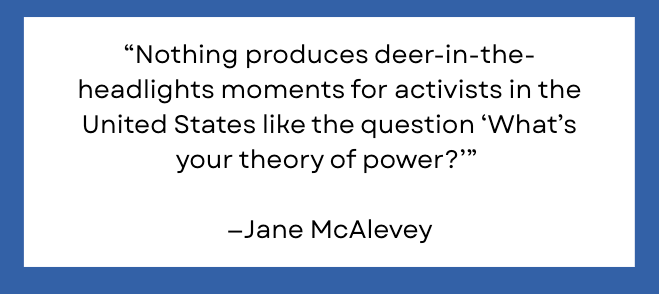
You will also find a collection of other surveys, readings, provocations, and resources. I’d love for you to read the section on theories of power in journalism (or the lack thereof) and tell me what you think. You can find contact information for both of us in the article.
*I’m in the third week of teaching a summer course at CUNY Newmark’s Graduate School of Journalism on journalism law, ethics, and safety, and I recently wrapped a spring course on how to be a freelance journalist. I continue to learn a lot from my students, who push me to ask better questions and sharpen my analysis.
Got a journalism ethics, law, or safety concern on the mind? Longing to discuss a recent news story that brings up ethical questions — or simply, big feelings — for you? Share with me; we might be able to cover it in class and dialogue with you about it.
Fragments (Things I’ve Enjoyed Recently)
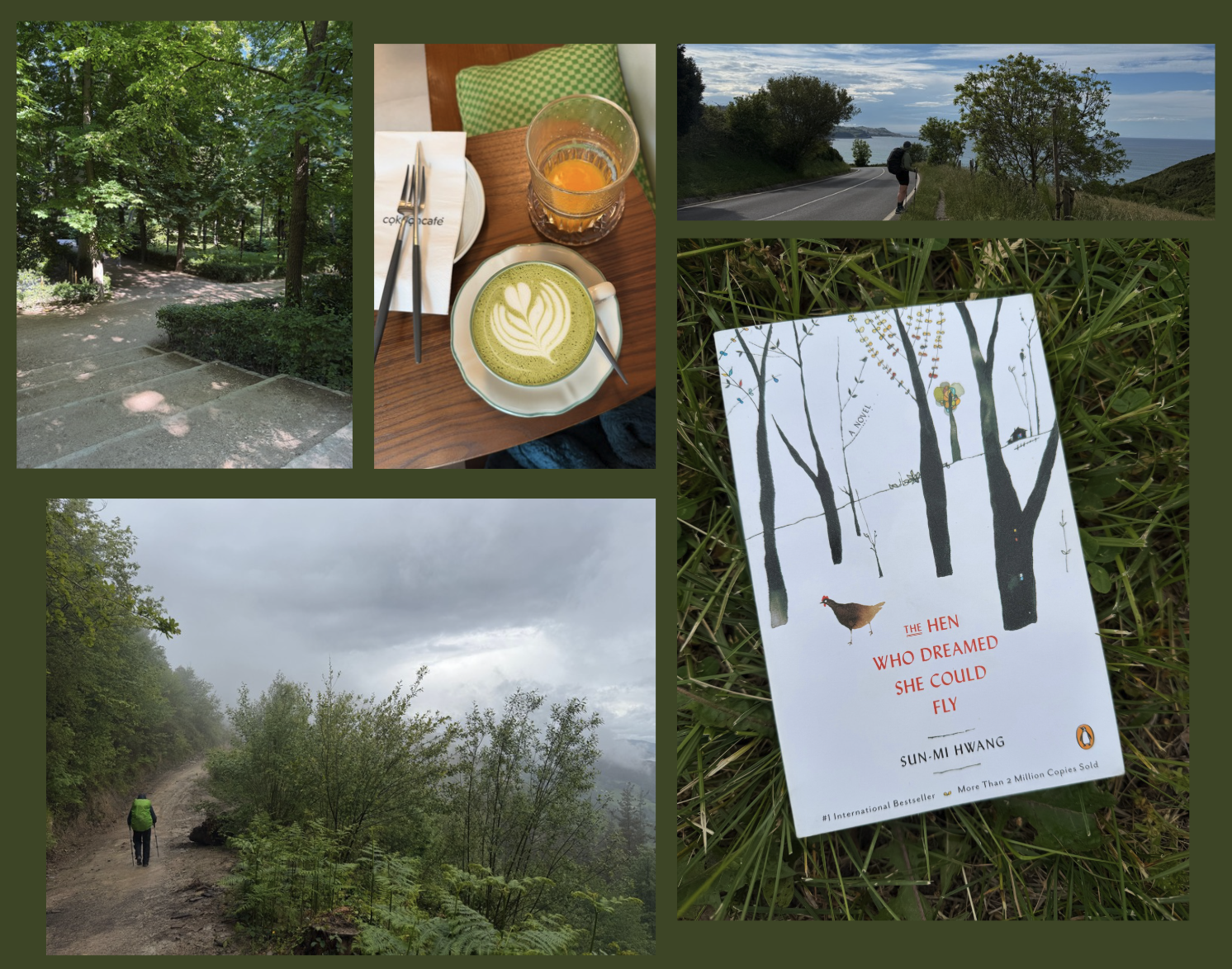
>In early May, I walked close to 100 miles across northern Spain with my partner Candice. At the conclusion of ~9 days of walking, I took a rest day in Bilbao, the Basque Country’s largest city. I was low on books because I didn’t want to carry them in my backpack while walking, so I visited the tiny English language section of a local bookstore and bought Sun-mi Hwang’s hit novella, “The Hen Who Dreamed She Could Fly.” I read it in close-to-one sitting, though I tried to make it last longer. Spending time with an indefatigable hen named Sprout was exactly what I needed. Highly recommend you do the same; shout if you want to borrow my copy.
>I finally saw Morgan Bassichis's show, "Can I Be Frank?," at SoHo Playhouse on Saturday. I laughed so hard I forgot who I was and what I'd been so worried about two hours prior which, I remembered, is what good art does. So much is made of doing somatic work right now but I've started to notice somatic work is happening to me all the time if I just pay attention. Laughing that hard for an hour and ten minutes did more than a week's worth of morning meditations so run-don't-walk to see it. The show is in the midst of its third run, which will conclude at the end of June. Being there felt like witnessing something rare and alight right before it becomes much bigger. I know I'll keep thinking about it for a long time.
>About a year ago, Brandi Collins-Dexter, a brilliant scholar, activist, and writer, passed away at 44. I was deeply shocked and saddened by her death. While we weren’t friends, I’d interviewed or conversed with her multiple times in the years prior, and she had been a real light in the small world of media organizing and advocacy that I’ve found myself in. I’ve been thinking of her and her work recently. I would love to read her writing in this moment. I wanted to share some links to her remembrances and her past work, which remains a guidepost for me.
> I was happy to see Harvard publicly announce that it has acquired the archives of my friend, the activist, scholar, and writer Barbara Smith. Congratulations to Barbara; shout out to the many archivists, neighbors, and friends who got those papers where they deserve to be; and advanced notice to everyone else to start planning your research projects now.
Good Things
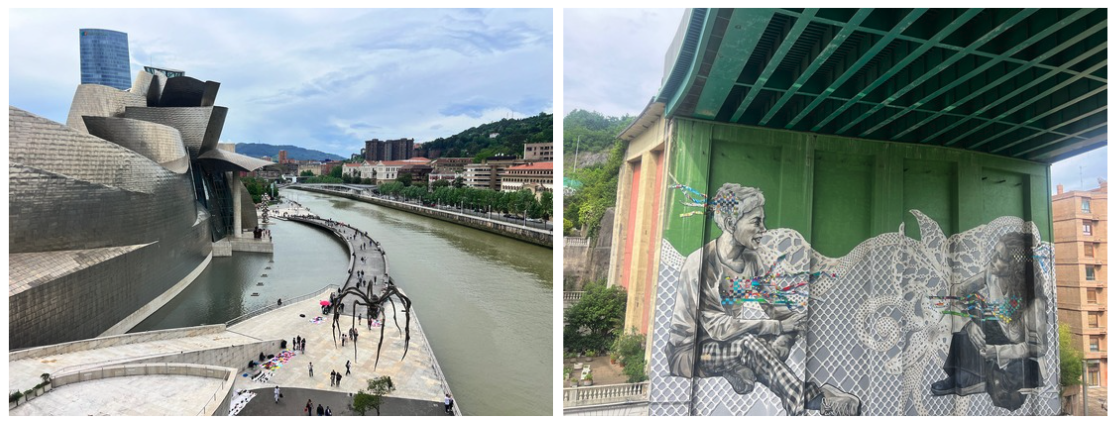
One of the unexpected highlights of my trip to Spain was spending half of a week wandering huge art museums in Bilbao & Madrid. Here are a couple of photos from those endless, expansive days spent looking. (I want to post photos of my favorite works of art but am hazy on how risky that is legally, lol, so I'll share some safe pictures for now. Email me if you want highlights and I can share privately. :))
That’s it for this week. ‘Til next time,
k
Makeshift Footnotes:
[1] I recommend reading more about this, as it's perhaps the most unbelievable of many unbelievable facts about eels. From Jenny Rogers in The Nature Conservancy Magazine: "No one—not a scientist nor the crew of a fishing boat—has ever witnessed eels spawning in the wild, which would be a crucial step to learning exactly where eels reproduce and thus what habitat they need. Only in the last 12 years have scientists put tracking devices on American eels and mapped their journey to their spawning grounds in the Sargasso Sea. And what triggers the eels to start that final migration? There are a lot of theories, but nobody knows for sure." What?
[2] I will likely write more about this at some point, and have collected a lot of thoughts and readings on the topic. If you're interested in exploring more, I recommend reading Robin Wall Kimmerer’s essay, “In the Footsteps of Nanabozho: Becoming Indigenous to Place,” and Leanne Betasamosake Simpson's book, "As We Have Always Done: Indigenous Freedom Through Radical Resistance"